• Gallery
    • All Disciplines
    • Communication Design
    • Communication Design (Honours)
    • Photomedia
    • UX Interaction Design
    • Motion Design
    • Branded Environments
    • Bachelor of Design (Architecture)
    • Industrial Design
    • Interior Architecture
    • Product Design Engineering
    • Architectural Engineering
    • Master of Architecture & Urban Design
    • Design Strategy & Innovation
    • Master of Design
    • Design Factory Melbourne
    • Postgraduates
  • Awards
  • PodX
  • Sponsors
  • Contact

Gallery

Communication Design

  • Back to all Students

Janice Seng

  • Email Address
  • Instagram
  • Website Link

Janice is a graphic designer and illustrator from Phnom Penh, Cambodia. She loves creating clear and colourful designs that combine illustration, collage, and graphic design. Her work is inspired by life in South East Asia, often drawing from themes of nostalgia, community, and culture.

Rememering the Silence (Exhibition Design)

Created as part of my Information Design (Honours) unit, this exhibition explores Cambodia's tragic past under the Khmer Rouge regime, and the delayed ECCC trials that sought justice. This project challenged me to visualize complex historical content in a way that communicates the exhibition's themes with clarity and sensitivity.

Ruby Gill - Some Kind of Control

This project included creating a vinyl back cover, lyric sheet, tour poster, and supporting merch for Ruby Gill's album Some Kind of Control. The album is intimate, witty, and beautiful, so I opted for something textured and raw, minimal but edgy.
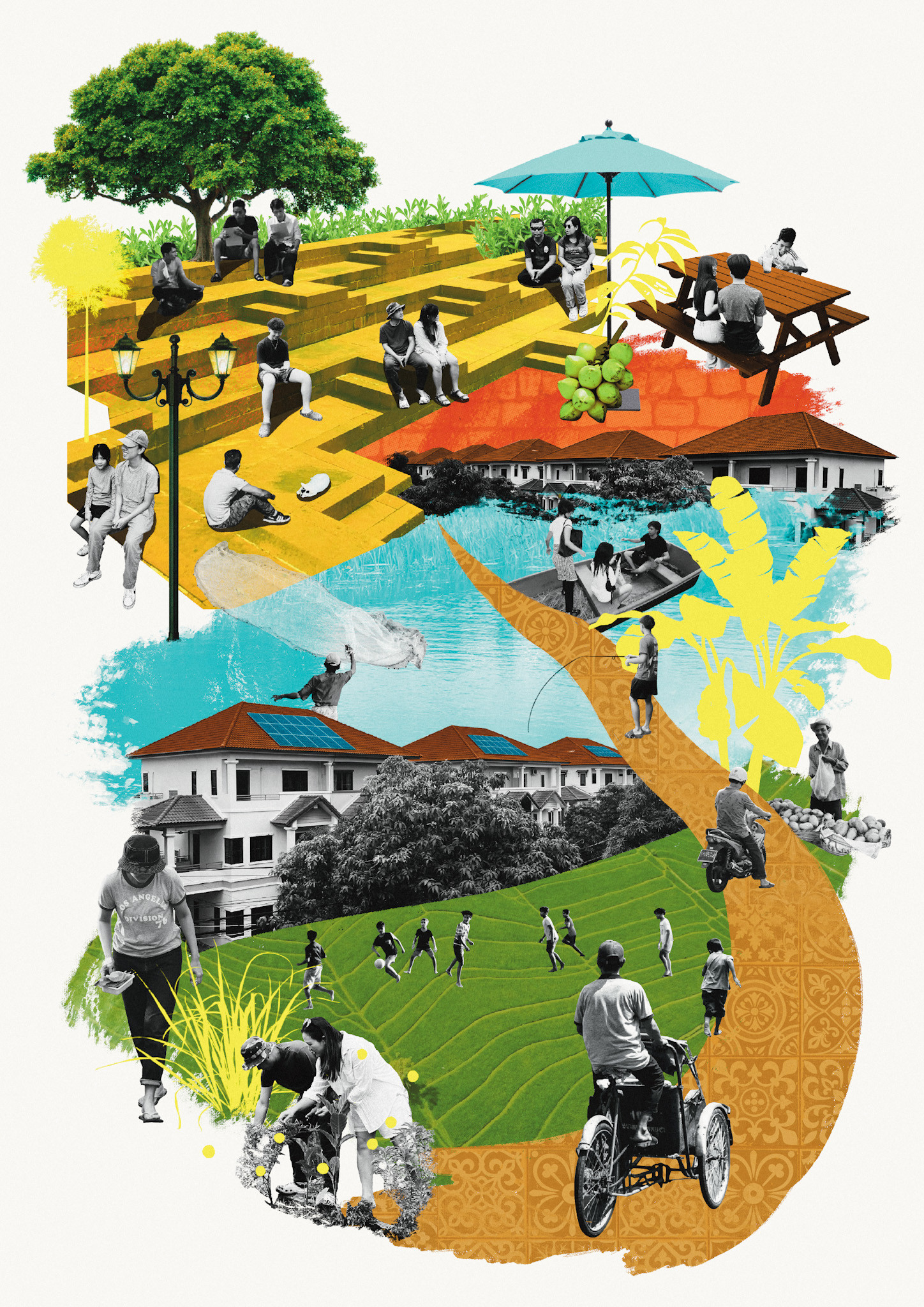
Borey Solarpunk (Collage for Exhibition)

Borey Solarpunk is a collage made in response to a call for Southeast Asian inspired Solarpunk art. It was part of a group exhibition in Phnom Penh and Chiang Mai, and reimagines Cambodia’s current housing plans as spaces that work with, rather than against, their natural landscapes.

Links

  • Student Login

Get in Touch

  • Follow us on Instagram

Become a Sponsor

  • Visit our Eventbrite page

Acknowledgements

  • Swinburne School of Design
    ©2025 | All Rights Reserved
  • Website by PeptoLab

Acknowledgement of Country

The School of Design and Architecture respectfully acknowledges the Wurundjeri peoples of the Kulin Nation as the Traditional Owners and knowledge-keepers of the lands, waters and sky that surround us, where we work, learn, create, communicate and make place. We recognise that sovereignty has never been ceded and this always was and will always be Wurundjeri Country. We pay our respects to Elders past, present and to all Aboriginal and Torres Strait Islander people who continue to make a better world through design.

We extend our acknowledgement to the Aboriginal and Torres Strait Islander staff, students, alumni, real-life clients, and knowledge keepers, who have contributed to our own education diversity and growth. We will continue to ensure that staff and students respectfully honour ancestral connection to Country and Place in everything that they do.

We are dedicated to the notion of design to make a better world and we acknowledge that making tools, shaping place, sharing stories, making meaning, wayfinding and collaborating have long been and continue to be both central and integral to First Peoples' cultures. We recognize that Aboriginal and Torres Strait Islander Peoples’ cultural contributions have continued relevance to design practice and commit to: reconciling ancestries of design and contemporary practice as well as pursuing culturally and professionally appropriate ways to engage with a diverse population of colleagues, industries and clients. In a time of treaty-making and voice we understand that there are overlaps between caring for Country and the sustainable production of goods, services, experiences, products and buildings.

Guided by the principles of respect, reconciliation, and reciprocity we undertake to indigenising and decolonising design practice by dismantling colonial structures and challenging biases that have marginalised Indigenous voices and design.

As students of SoDA you will be given opportunities to both engage with and educate yourself in Indigenous creative practices and cultural protocols through a lens of inclusivity, diversity, respect, mutual understanding, inter-cultural dialogue in all aspects of design practice. Indigenous people have been telling stories, making tools, and connecting to Country through visual media, placemaking and place marking for more than 60,000 years and these practices are part of an ongoing, evolving and live tradition.